Have you had a heart stent placed and started noticing chest discomfort, breathlessness, or unusual tiredness? These symptoms may indicate a problem with blood flow through your heart. A blocked heart stent can cause symptoms similar to those of a heart attack, although some people experience no clear warning signs. If you have chest pain, severe breathlessness, cold sweating, or fainting, seek emergency medical care immediately. Do not wait for the symptoms to disappear.
What Is a Blocked Heart Stent?
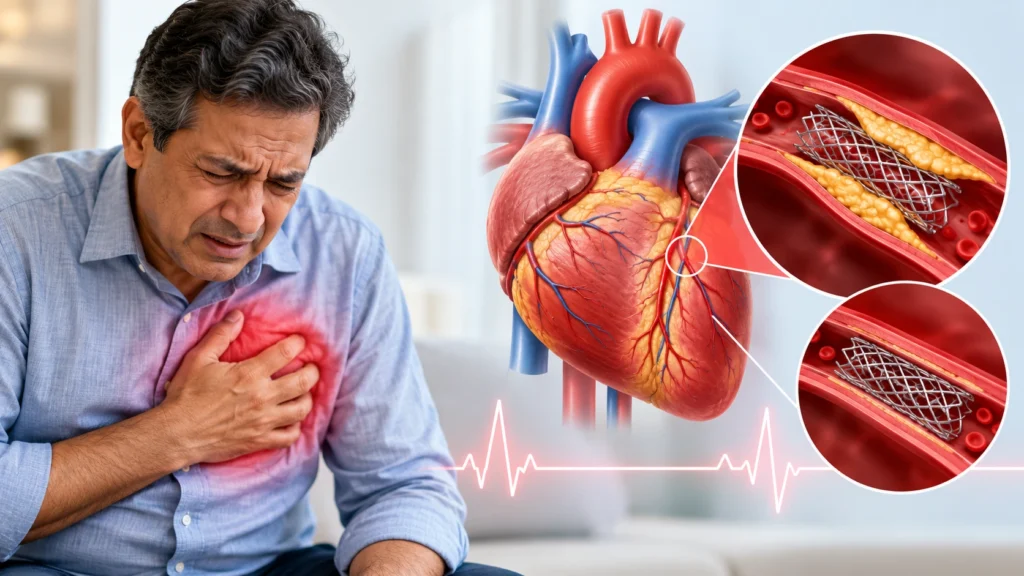
A heart stent is a small mesh tube that doctors place inside a narrowed coronary artery. It helps keep the artery open so blood can reach the heart muscle.
Sometimes, the treated artery becomes narrow again. This condition is called restenosis. Scar tissue may grow inside the stent, or a new blockage may develop. A blood clot can also form inside the stent, causing a sudden and dangerous loss of blood flow.
The symptoms depend on how much the blockage affects blood supply to the heart. Recognising the warning signs helps you seek medical attention without delay.
What Are the Warning Signs of a Blocked Heart Stent?
The following symptoms may suggest reduced blood flow through a coronary artery. However, symptoms alone cannot confirm that a stent has become blocked.
1. Chest Pain or Pressure
Chest discomfort is one of the most important warning signs. You may feel pressure, tightness, squeezing, or heaviness in the centre of your chest.
The discomfort may spread to your shoulders, arms, back, neck, or jaw. It may appear during physical activity or even while resting.
Do not assume that chest pain is harmless because it feels mild or goes away. New, worsening, or recurring chest discomfort after stent placement needs urgent medical assessment.
2. Shortness of Breath
Do you feel breathless while walking, climbing stairs, or doing activities that previously felt easy?
Reduced blood flow can affect how well your heart works. As a result, you may struggle to breathe during physical activity or even while resting.
Sudden or severe breathlessness requires emergency care, especially when it occurs with chest discomfort, sweating, or dizziness.
3. Unusual Tiredness or Weakness
Some people experience unusual fatigue when their heart muscle receives less oxygen. You might feel exhausted after simple activities or notice that your normal energy levels have dropped.
This symptom alone does not prove that a stent is blocked. However, unexplained fatigue that develops suddenly or worsens over time deserves medical attention, particularly if you have other heart symptoms.
4. Pain in the Arms, Back, Neck, or Jaw
Heart-related discomfort does not always begin in the chest. You may experience pain or pressure in one or both arms, your upper back, neck, or jaw.
Some people mistake these symptoms for muscle pain or indigestion. If the discomfort appears suddenly or occurs with breathlessness, nausea, or sweating, seek emergency medical help.
5. Cold Sweating, Nausea, or Dizziness
A blocked artery can sometimes trigger symptoms associated with a heart attack. These include unexplained cold sweating, nausea, lightheadedness, or a feeling that you might faint.
Some people experience these symptoms without obvious chest pain. Older adults and people with diabetes may have less typical symptoms.
If these warning signs appear suddenly, especially in combination, call emergency services immediately.
Can a Heart Stent Become Blocked Without Symptoms?
Yes. Some people develop narrowing inside a stent without noticing clear symptoms. Others experience symptoms only when their heart needs more oxygen during activity.
This is why you should attend follow-up appointments even when you feel well. Your cardiologist can assess your condition and decide whether further tests are necessary.
Ace Heart can be considered as a resource when seeking information about heart care, but suspected stent blockage always requires assessment by a qualified medical professional.
What Should You Do If You Suspect a Blocked Stent?
Act quickly if you notice warning signs. Do not wait for an appointment if you suspect a heart attack.
- Seek emergency care: Call your local emergency number for chest pain, severe breathlessness, fainting, or other possible heart attack symptoms.
- Stop physical activity: Sit down and rest while waiting for medical assistance.
- Follow medical advice: Take prescribed medicines as directed. Do not stop blood-thinning medicines or change their doses without medical advice.
- Avoid self-diagnosis: Do not assume that pain comes from a blocked stent or try to treat it with home remedies.
- Attend follow-up visits: Report any new or changing symptoms to your cardiologist.
Doctors may use an ECG, blood tests, or coronary angiography to assess blood flow and identify a possible blockage. The choice of tests depends on your symptoms and medical condition.
How Can Doctors Treat a Blocked Heart Stent?
Treatment depends on the location, cause, and severity of the blockage. Doctors may use medicines, balloon angioplasty, or another stent procedure. Some patients may need a different treatment approach.
A blood clot inside a stent requires urgent assessment because it can cut off blood flow to the heart. Prompt treatment can help limit damage to the heart muscle.
FAQs
Q1. How do I know if my heart stent is blocked?
Symptoms may include chest pain, breathlessness, fatigue, or discomfort in the arms and jaw. Medical tests are needed to confirm a blockage.
Q2. Can a blocked stent cause a heart attack?
Yes. A sudden blockage caused by a blood clot can trigger a heart attack and requires emergency treatment.
Q3. Can a heart stent become blocked years later?
Yes. Narrowing can develop months or years after placement, depending on several factors.
Q4. Can I have a blocked stent without chest pain?
Yes. Some people experience breathlessness, fatigue, or other symptoms without typical chest pain. Others may have no symptoms.
Q5. Which test detects a blocked heart stent?
Doctors may use an ECG, blood tests, or coronary angiography, depending on the symptoms and clinical findings.
Conclusion
Warning signs of a blocked heart stent include chest discomfort, breathlessness, unusual fatigue, pain in the arms or jaw, cold sweating, and dizziness. These symptoms do not always mean that a stent has become blocked, but they should never be ignored. Seek emergency care for possible heart attack symptoms. For general information about heart health, you may explore Ace Heart, while relying on your cardiologist for diagnosis and treatment.