What happens to women before they have pre-heart attack symptoms female? Early warning signs are frequently not severe or obvious enough for many women to be aware of them. Since some women believe that it is only stress, weakness, or digestive issues, the body may be sending key signals before a heart attack even happens. Knowing the signs and symptoms of a pre-heart attack for female patients can help them get timely medical attention and prevent complications. Heart disease strikes women of all ages, and it can be saved if action is taken early. This blog details the general symptoms, warning signs, and risk factors and why it is important to be aware of changes in the body before a heart attack occurs.
It is important to know what the signs of a pre-heart attack are in women.
Understanding Pre-Heart Attack Symptoms in Women
Women may experience different symptoms when having a heart attack. Not all women experience a lot of pain in the chest initially. Rather, they see minor physical changes that gradually get worse.
These signs can come days, weeks, or months before a heart attack. Some women disregard them as they appear normal initially. That is why it is important to be aware.
Any unusual body pain, unusual fatigue, or difficulty breathing should be a concern for women. The earlier these signs are noticed, the better the chance of early treatment.
Chest Discomfort and Pressure
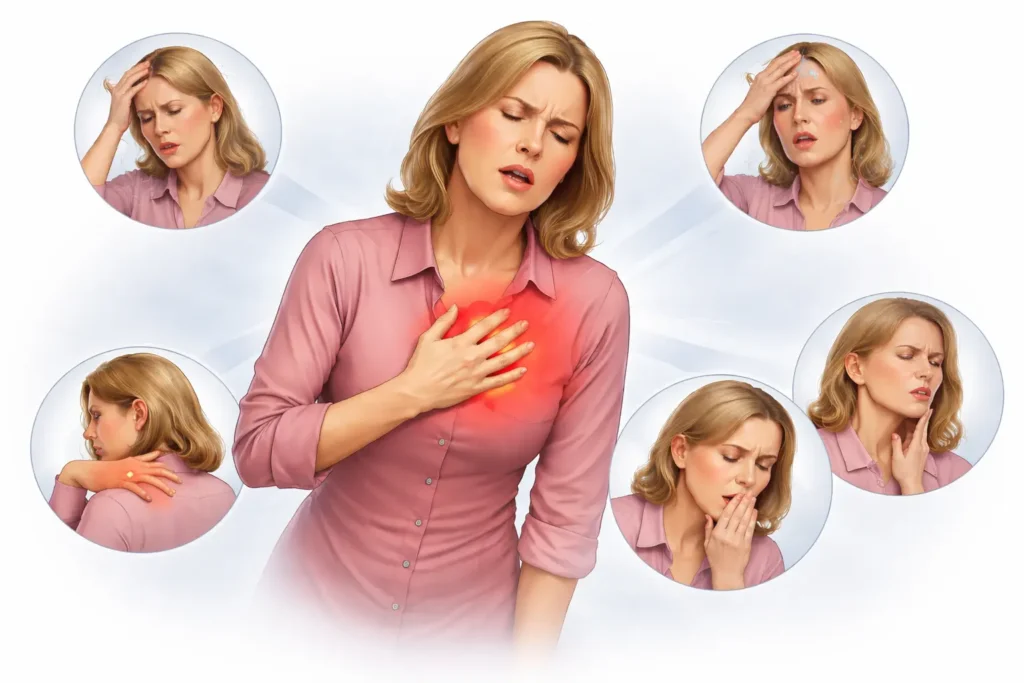
Common signs and symptoms prior to a heart attack include chest pain. There may be sensations of pressure, heaviness, squeezing, or tightness in the chest region.
The pain may be intermittent, rather than continuous. This sensation is often confused by women with acidity or muscle pain.
The pain can be a bit painful, but if it’s happening more than once, it shouldn’t be dismissed.
Unusual Fatigue and Weakness
Another serious warning sign is extreme fatigue. When it comes to exercise, women tend to feel tired even when they don’t work out too hard.
Even simple tasks like walking around, climbing stairs, or cooking can become challenging. Body weakness after rest. This abnormal tiredness can happen gradually in the lead-up to a heart attack and last for several days.
Shortness of Breath
Difficulty breathing may occur prior to pre-heart attack symptoms in females. Resting or engaging in everyday activities may cause women to become short of breath. Shortness of breath happens at times without chest pain. This makes it more difficult to link the symptom to heart issues.
When breathing becomes easier and easier, suddenly, for no apparent reason, help is required.
Pain in Other Parts of the Body
Women may also experience pain in other areas besides the chest. It may radiate to the neck, jaw, shoulder, upper back, or arms. This pain can be dull, tight, or uncomfortable. Hearts may not be expected to cause pain outside of the chest, and many women overlook these symptoms.
If pain continues in these areas, it should not be ignored.
Nausea and Stomach Discomfort
Some women experience stomach-related symptoms before a heart attack. These can be nausea, a feeling of not being able to eat, bloating, or stomach pain. These symptoms are often mistaken for food-related symptoms.
If these symptoms occur with fatigue or chest pain, however, they might be a sign of a heart problem. It’s crucial to listen to the body.
Sweating and Dizziness
Other symptoms that may occur before a pre-heart attack in females
include cold sweats and dizziness. Women can get dizzy or faint. If you perspire profusely and are not exercising, you might be experiencing heart strain.
Some women also might feel dizzy or shaky when standing. These symptoms should be evaluated urgently by medical professionals, particularly with chest pain.
Sleep Problems Before a Heart Attack
Before having a heart attack, many women experience changes in their sleep. May have trouble falling asleep or waking up many times during the night. For some women, it can be a feeling of anxiety or restlessness for no known reason. Fatigue, breathlessness, and poor sleep should alert you to the fact that there may be a heart problem.
It is not always advisable to dismiss sleep problems as stress.
Why Women Often Ignore Early Symptoms
For women, signs of the disease are often not serious, so treatment is often avoided. May go about daily activities without being aware of the seriousness of the condition. Many symptoms resemble those of other common health issues, including gas, stress, weakness, or body pain.
Women also neglect their health because of their social responsibilities and hectic schedules. The delay could add to the likelihood of complications.
Risk Factors That Increase Heart Attack Chances in Women
There are several health conditions that make women susceptible to experiencing heart attacks. Several main risk factors are high blood pressure, diabetes, obesity, smoking, and high cholesterol.
Another factor that impacts the health of the heart is stress and lack of physical activity. The risk can be further raised by hormonal changes following menopause.
Women who are at risk of heart disease because they have a family history should be particularly vigilant about symptoms.
When to Seek Medical Help
Do not delay going to the doctor until symptoms are severe. Major heart damage can be avoided if proper medical treatment is administered early. If the pain in the chest, trouble breathing, fatigue, or dizziness persists for more than a few minutes, prompt medical intervention is required.
Prompt diagnosis and treatment increase the likelihood of recovery and minimise complications.
Importance of a Heart-Healthy Lifestyle
Heart disease can be prevented by maintaining a healthy lifestyle. Exercise also helps the blood flow and the heart. The other benefit of healthy eating habits is that they’ll help in maintaining a healthy heart.
Limiting processed food and eating a healthy diet is good for general health. It is also important for prevention to manage stress and sleep and to refrain from smoking.
Conclusion
Knowing what the signs of pre-heart attack symptoms in females are can save lives. Several warning signs will come slowly and quietly and are likely to be overlooked. By noticing any alterations in the body and getting medical assistance at an early stage, there is a possibility of minimizing any serious risks. If women notice anything unusual about their tiredness, chest discomfort, or difficulty breathing, they should not ignore it. Frequent exams and good health habits contribute to good heart health. Many people turn to ACE Heart for their advanced heart health needs and advice.
FAQs
What are the early signs of a heart attack in women?
Before a heart attack, women can have chest pain, fatigue, shortness of breath, nausea, and body pain.
Can women have a heart attack without chest pain?
Yes. For many women, the symptoms are fatigue, breathlessness, or jaw pain, but not severe chest pain.
How long can symptoms appear before a heart attack?
Symptoms can occur days, weeks, or months before a heart attack.
Is unusual fatigue a warning sign?
Yes. Extreme fatigue, even though no physical activity has been done, may be the first sign.
Can stress increase heart attack risk in women?
Yes. Chronic stress can make the heart unhealthy and raise risk factors.
Why do women ignore heart attack symptoms?
Numerous symptoms are not serious and mimic common health problems, like stress or acidity.
Is jaw pain linked to heart attacks in women?
Yes. A few women may experience pain in the jaw, neck, or shoulders prior to a heart attack.
Can younger women also face heart attack risks?
Yes. There’s no age restriction on heart disease in females, particularly if they have unhealthy lifestyle habits.
What should a woman do during warning symptoms?
She should seek immediate medical attention and should not ignore the symptoms that persist.
Can healthy habits reduce heart attack risk?
Yes. Regular health checks, stress management, eating the right food, and exercising are all factors that help keep your heart healthy.