Many people believe that heart attacks only affect older adults. However, heart problems can also happen in teenagers, although they are uncommon. Knowing the heart attack symptoms in teenagers can help parents, teachers, and young people respond quickly during an emergency. Early medical care can make a big difference. According to the American Heart Association (AHA), heart disease is less common in children and teenagers, but certain medical conditions and lifestyle habits can increase the risk. Therefore, understanding the warning signs is important instead of ignoring unusual symptoms.
Can Teenagers Have a Heart Attack?
Yes, teenagers can have a heart attack, but it is rare. In most cases, a heart attack in a teenager is linked to an underlying health condition rather than age. Some teenagers are born with heart defects, while others may have heart muscle diseases, inherited cholesterol disorders, or serious blood vessel problems. In rare situations, drug misuse or certain medical conditions can also increase the risk. For example, imagine a 17-year-old athlete who suddenly feels severe chest pain during practice. At first, everyone may think it is a muscle strain. However, after medical tests, doctors discovered an undiagnosed heart condition that reduced blood flow to the heart. This example shows why chest pain should never be ignored, especially if it happens with other warning signs.
According to the Centers for Disease Control and Prevention (CDC), congenital heart defects affect nearly 1 in every 100 babies born in the United States. Many people live healthy lives with treatment, but some conditions require lifelong monitoring because they can increase the risk of heart complications later. Although heart attacks remain uncommon in teenagers, recognizing symptoms early and seeking medical care quickly can improve outcomes.
Common Heart Attack Symptoms in Teenagers
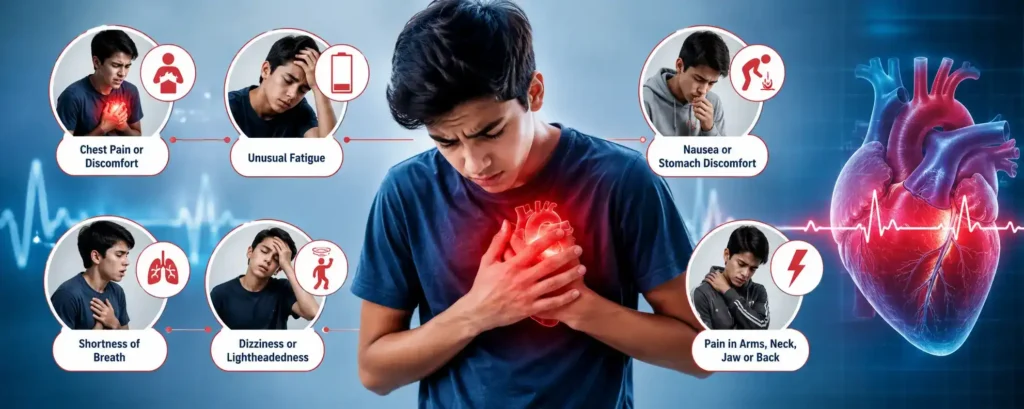
The symptoms of a heart attack may not always look the same. Some teenagers experience sudden and severe symptoms, while others notice mild warning signs before the condition becomes serious. The most common symptom is chest pain or pressure that does not go away. Some teenagers may also feel pain in the left arm, shoulder, neck, jaw, or back. Other warning signs include shortness of breath, unusual tiredness, dizziness, nausea, cold sweats, or fainting. These symptoms should never be ignored, especially when several appear together.
For example, a teenager who suddenly feels chest tightness, becomes dizzy, and struggles to breathe after light physical activity should receive immediate medical attention. Even if the cause is not a heart attack, doctors can identify the actual problem and provide the right treatment. Research published by the American Heart Association explains that chest pain in children and teenagers is usually not related to heart disease. However, chest pain accompanied by fainting, breathing difficulty, or pain spreading to the arm or jaw requires urgent medical evaluation.
What Can Increase the Risk of Heart Attack Symptoms in Teenagers?
While the incidence of teen heart attacks is very low, there are some factors that could make it more likely. Understanding the risk factors and being aware of heart attack symptoms in teenagers can help with early detection and timely medical care. Some of the most significant risk factors include congenital heart defects, genetic high cholesterol, overweight, diabetes, high blood pressure, smoking, vaping, and drug abuse. Other factors that can have a long-term impact on heart health include an unhealthy diet and insufficient exercise. Family history also has an impact. Teenagers should talk to their health care provider if they have young family members with heart disease. Some diseases may be identified before they become serious through regular check-ups.
For instance, a teen who has obesity and untreated high blood cholesterol might not have any symptoms for years. But it is possible to lower the risks that may occur in the future by regular medical examinations, healthy eating, and physical activity. The World Health Organization (WHO) reports that non-communicable diseases (NCDs) associated with unhealthy lifestyles are rising in the world. So it’s never too late to develop healthy habits when you’re a teenager to help keep your heart healthy in adulthood.
When Should You Seek Emergency Medical Help?
It is not always easy to know when chest pain is serious. Sometimes the cause is muscle strain, anxiety, or indigestion. However, no one should ignore the symptoms because they may point to a heart emergency. Recognizing heart attack symptoms in teenagers can help families respond quickly and seek timely medical care. Seek emergency medical help immediately if a teenager has severe chest pain, trouble breathing, faints, becomes confused, or feels pain spreading to the arm, neck, jaw, or back. Cold sweats, sudden weakness, or a fast heartbeat with chest discomfort also need urgent medical attention.
For example, if a teenager suddenly collapses during a football match after complaining of chest pain and dizziness, do not wait to see if the symptoms improve. Call emergency medical services immediately. Quick treatment can reduce complications and improve the chances of recovery. According to the American College of Cardiology, early medical care plays a key role in treating heart emergencies. Even if the symptoms are not caused by a heart attack, prompt evaluation helps doctors identify the actual problem and begin the right treatment.
How to Keep Your Teen’s Heart Healthy
Good habits established in the teen years can help keep the heart healthy for years to come. Get teenagers to eat more fruits, vegetables, whole grains, and lean protein, and fewer sugary drinks and highly processed foods. Exercise helps keep the heart healthy and gives good fitness as well. Parents should promote adequate sleep and limit stress, and regular health checks should be made, particularly if there is a family history of heart disease. Avoid smoking, vaping, alcohol, or illegal drugs, as they may harm the heart and blood vessels.
A teen who drinks water instead of sugary drinks, gets regular physical activity at least 60 minutes a day, and visits the doctor regularly has a better chance of having a healthy heart. Little things can make a big difference in the long run. Regular exercise and a healthy diet are the most important recommendations by the World Health Organization (WHO) to decrease the likelihood of developing heart disease over the course of one’s life. So, early teaching of healthy habits can have a positive impact.
Conclusion
Heart attacks in teenagers are rare, but they can happen. Recognizing heart attack symptoms in teenagers and understanding the risk factors can help families act quickly during an emergency. Healthy lifestyle habits, regular medical check-ups, and early treatment of heart conditions can also lower future risks. If a teenager experiences symptoms that suggest a heart problem, immediate medical attention is important. Trusted healthcare providers, such as Ace Heart Institute, can guide families with accurate diagnoses, timely treatment, and expert cardiac care.
FAQs
Can a healthy teenager have a heart attack?
Sure, but it’s a minority. Most teens’ heart attacks are associated with an underlying heart disease or other medical condition.
What is a symptom of a heart attack that should NOT be overlooked in teenagers?
If the chest pain is severe and is accompanied by shortness of breath, fainting, or spreading pain to the arm or jaw, seek immediate medical attention.
Do teens have the opportunity to lower their risk for heart problems?
Yes. Eating a healthy diet, exercise, adequate sleep, avoiding smoking or vaping, and regular health check-ups are important ways to support heart health.