
Ever searched online to find out what the difference between cardiac arrest vs heart attack is? Many people interchange the words, but they refer to two different medical emergencies. It is crucial to differentiate them, as early recognition of warning signs can save a life. A heart attack is caused by the blockage of blood flow to the heart, while cardiac arrest occurs when the heart suddenly stops pumping blood at an effective level. Both of these conditions can be dangerous and need medical help, but they impact the body differently. Learn about cardiac arrest vs heart attack, the treatment options, symptoms and causes, and prevention tips in simple language with this guide.
Understanding the Difference Between Cardiac Arrest vs Heart Attack
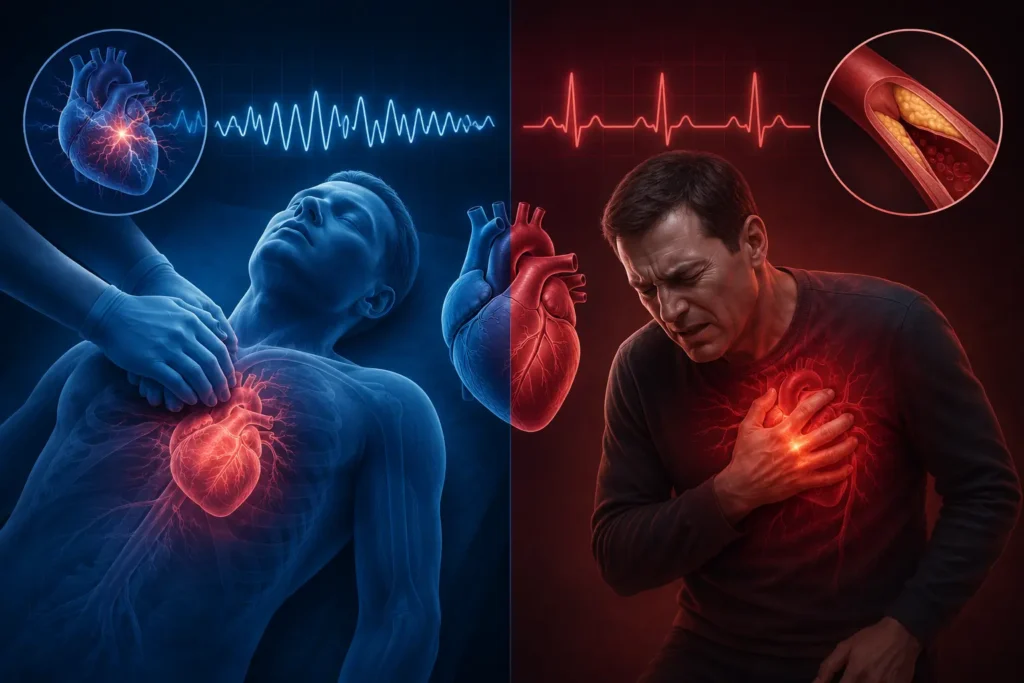
The only difference between cardiac arrest vs heart attack is what happens in the body! A heart attack is a problem with blood flow. The blockage of blood supply causes it to affect a portion of the heart muscle. In most cases, the heart continues to beat during a heart attack, but it may not be working efficiently.
A cardiac arrest occurs when the heart’s electricity is out of balance. It occurs when the heart suddenly begins beating in an abnormal rhythm and is no longer pumping blood properly. The brain and other organs are deprived of oxygen-rich blood during cardiac arrest, and the person becomes unconscious within seconds. Although these conditions vary, cardiac arrest may sometimes be caused by a severe heart attack.
What is a Heart Attack?
A heart attack is a blockage of one or more of the coronary arteries (also called a myocardial infarction). These arteries carry O₂-rich blood to the heart muscle. Without blood flow, the portion of the heart goes into damage mode.
In most cases, a buildup of cholesterol and other substances forms a plaque in the arteries over time that causes a heart attack. When the plaque ruptures, a blood clot could form and completely block blood flow. Many people have time to get emergency medical assistance because the symptoms come on gradually. Rapid treatment results in improved blood flow and minimizes damage to the heart muscle.
What Is Cardiac Arrest?
Cardiac arrest happens when the heart suddenly stops beating efficiently and is a life-threatening emergency. This is typically due to a faulty electrical function in the heart. Oxygen is no longer going to the brain and other organs when it ceases circulation. The person suddenly collapses, goes unconscious and ceases normal breathing. Cardiac arrest gives little time to respond, unlike a heart attack. Immediate CPR and emergency medical treatment are crucial to survival. Cardiac arrest can be fatal within minutes if not intervened in quickly. That’s why it’s crucial to know what to look for when someone has a cardiac arrest.
Symptoms of Cardiac Arrest vs Heart Attack
There are major differences between the symptoms of a cardiac arrest vs heart attack.
- The person having a heart attack can have discomfort, pressure, tightness, or pain in the chest.
- It can radiate to the arms, shoulders, neck, jaw, and back. Signs of this are shortness of breath, nausea, sweating, dizziness, and unusual fatigue. Rather, cardiac arrest typically occurs without warning.
- The person falls over, becomes unresponsive, and ceases breathing normally. A person might not have any symptoms until later.
People can respond promptly and get the appropriate care by knowing these differences.
Risk Factors and Cause
There are many risk factors for cardiac arrest vs heart attack
- Coronary artery disease, in which plaques develop within the coronary arteries, is the most common cause of heart attacks.
- Smoking, high blood pressure, high cholesterol, diabetes, obesity, inactivity, and family history of heart disease are all risk factors.
- Arrhythmias are abnormal heart rhythms that frequently cause cardiac arrest.
- Increased risk can occur due to previous heart attacks, heart failure, inherited heart disease, or structural heart disease.
While some of the risk factors you have may be genetic, many can be controlled with lifestyle modifications and proper medical care.
Emergency Treatment and First Response
Treatment varies, depending on the condition.
- If a person has a heart attack, the attention of doctors is directed towards restoring blood flow to the heart as soon as possible.
- Medications, angioplasty, or other treatments that unclog blocked arteries may be used.
- If cardiac arrest occurs, CPR should be administered immediately.
- CPR helps keep blood flowing to the brain and the other vital organs until more advanced medical care is available.
- Healthcare professionals can also use a defibrillator as a means to restore a normal heart rhythm.
In both cases, prompt emergency telephone calls are the primary step to take. The chances of survival and recovery are greatly enhanced if action is taken promptly.
Can a Heart Attack Lead to Cardiac Arrest?
Yes, cardiac arrest is a possible complication of a heart attack. A damaged heart muscle, as in a heart attack, can disrupt the electrical system of the heart. This can cause serious arrhythmias, which can interfere with how well the heart pumps blood. This causes cardiac arrest to be a possibility. It is important to keep in mind, however, that not all heart attacks result in cardiac arrest. This is a complication that many don’t develop after treatment and recovery. Early diagnosis and timely treatment are crucial in minimizing the risk of cardiac arrest vs heart attack.
Conclusion
To be able to distinguish between cardiac arrest vs heart attack so you can know how to respond in a medical emergency. A cardiac arrest occurs when the heart is unable to pump blood, whereas a heart attack occurs when the blood supply to the heart is not adequate. Both conditions are medical emergencies. Understanding the signs, risk factors, and treatments can help keep your heart healthy and help improve your results. If you’re looking for professional advice and high-quality cardiac treatment, turn to the professionals at Ace Heart.
FAQs
Is cardiac arrest the same as a heart attack?
No. Heart attacks are caused by the blockage of blood flow to the heart, and cardiac arrests are caused by a sudden failure of the heart to pump blood effectively due to an electrical malfunction.
Which is more dangerous, cardiac arrest or heart attack?
Both are emergencies, but cardiac arrest is life-threatening because there is no other blood flow. Emergency care and immediate CPR are a must.
Can a person survive cardiac arrest?
Yes. CPR can be performed rapidly, and once the victim is taken to the hospital and receives advanced medical care, they may survive. The earlier that interventions take place, the better the outcomes will be.
What is the most common warning sign of a heart attack?
The most common warning sign is chest pain or chest discomfort. But for others, the symptoms might be shortness of breath, nausea, or unusual tiredness.
Can healthy people experience cardiac arrest?
Yes. Even healthy people with no known heart disease can develop cardiac arrest due to some inherited heart disease or electrical problems.